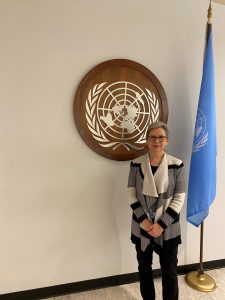
by Lisa Roberts, DrPH, MSN, FNP-BC, CHES, FAANP, FAAN, is a Transcultural Nursing Society member who attended CSW70 as part of our NGO delegation.
Attending the 70th Session of the Commission on the Status of Women (CSW70) at the United Nations was both a professional honor and a profound personal experience. As a transcultural nurse scholar, I arrived at UN headquarters in New York deeply aware that the voices here represent the lived experiences of women and girls across diverse cultural landscapes. The session, held from 9-19 March 2026, centered on the priority theme: ensuring and strengthening access to justice for all women and girls by promoting inclusive and equitable legal systems and eliminating discriminatory laws and practices.
Access to justice is not merely a legal concept-it is a social determinant of health. UN Women emphasized the troubling reality that justice systems around the world often fail to protect women and girls, especially in contexts of conflict, democratic backsliding, and shrinking civic space. For transcultural nursing, this reinforces the imperative to understand how structural inequalities shape health outcomes, safety, and autonomy across cultures.
Throughout the week, I found myself reflecting on how transcultural frameworks-such as Leininger’s Culture Care Theory-can guide health professionals in addressing the cultural, political, and socioeconomic barriers discussed at CSW70. Many speakers highlighted the urgent need for inclusive systems that recognize the unique vulnerabilities faced by women and girls from marginalized cultural groups, including those lacking birth registration, facing child marriage, discriminatory laws, or navigating inequitable access to services. These realities align with what nurses witness globally: justice and health are inextricably connected.
NGO participation at CSW70 provided a vital platform for community‑level stories and solutions. Representatives from around the world underscored how cultural humility and community partnership are essential for advancing gender equality. As a delegate, engaging in these dialogues affirmed that nurses have a pivotal role not only in providing culturally congruent clinical care but also in advocacy that spans policy, human rights, and global health.
One of the most impactful moments for me came during sessions examining women’s full and effective participation in public life-a theme of CSW70. These discussions reiterated that empowerment is both a health outcome and a pathway to justice. In transcultural nursing, promoting participation means elevating culturally grounded perspectives and supporting women as leaders in their own communities.
Leaving CSW70, I felt a renewed commitment to advancing justice‑oriented, culturally informed nursing practice. The session reminded me that global advocacy is not separate from nursing-it is an extension of our ethical duty to promote dignity, equity, and holistic well‑being across all cultures.